Friday, 23 December 2016

The True Meaning of Christmas

I think a lot of people in long term relationships have that moment when the other person does something that makes you think "We've got a keeper folks!". One of mine was when my lady announced she hated Christmas.

I loathe Christmas. I despise Christmas. One of my great dreams is to someday spend Christmas in a hotel room with a giant pile of books and Chinese take away and pretend it isn't happening. People tell me I'll feel differently when I have kids of my own. I can't think of a better reason to never have kids.

Despite this, there are things to be admired about Christmas, and I'm not just talking about the opportunity to try and consume your own body weight. That's every day. Or that chance to fill your book shelves even more.

Look at Christmas - the date, the trappings, the everything. Look at - presuming a fair bit of cultural commonality here - the tree. Look at angel decorations. Look at the fat git in red with the smug expression who's everywhere. What do you see?
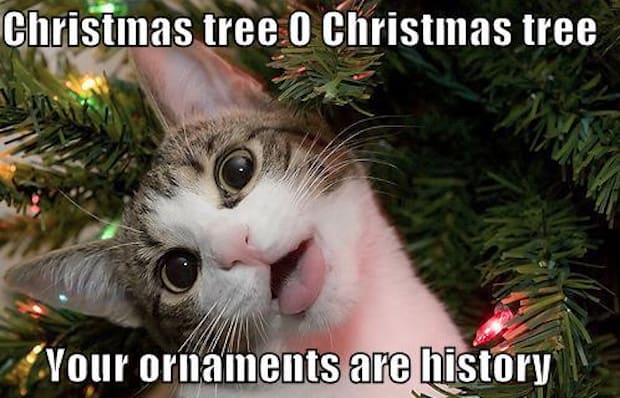

Okay, so that's what I see, but everyone else...

Syncretism. No blogger autocorrect, not cretinism, even if I think you're close to the mark there. Syncretism. Christmas as we know it, at least in the UK and many other parts of the Anglosphere, is a mixture of traditions from many different places. And those traditions - and the food stuffs, the drinks, the deities, and the everything else - are constantly evolving as people find ideas they like and drop ones they don't.

And syncretism - perhaps not the right word when talking about ideas - is very much evident in many of the great works of fantasy. They draw on a wide range of influences, just like real world traditions, and this is what gives them the depth and vividness of culture that makes people rave about books. 


In contrast, there are books that give the impression of the author having read nothing but the genre for the last ten years. Sometimes I like those books. Occasionally I even love them. Sometimes I read a few pages and put the book back. What I never do is think "Here be one of the greats". Even with the most compelling writing, the most captivating characters, the tightest plotting... it just won't catch. Its like cooking. Incredible technique and imagination can only so do much with tired ingredients. In the case of fantasy literature, the best ingredients means a few ideas that aren't in every book already.

These don't have to be giant-sized idea or crazy combinations. Tolkien took his own experiences and beliefs, married them to a blend of northern European legend, and created a legend of his own. Martin got a mileage out of an unusually direct port of a very specific time in English history. And JK Rowling stuck gold with British boarding schools + Wizards. Neither of the latter two were the first to go there either; the ideas don't have to be completely new. There just has to be something fresh about it.

So I urge all of the writers reading this to embrace the true spirit of Christmas and keep blending ideas together in that quest to find the perfect whole, beloved by nearly everyone.

Maybe its not such a bad holiday after all. Hmm... nah. Bah humbug everyone!


Thursday, 8 December 2016

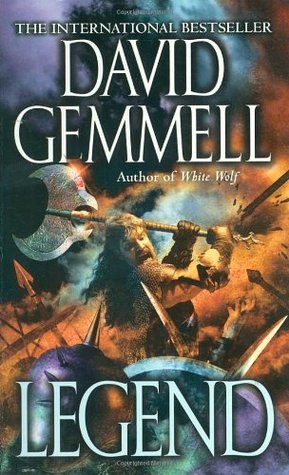
Legend by David Gemmell

As 2016 comes to an end and we reflect on just how miserable a year it was, we should also take time to remember the good things that happened. Even the darkest cloud has a silver lining somewhere. Take cancer. Now, in the words of the great prophet Deadpool, el cancer is a shit-show. But without David Gemmell getting a terminal cancer diagonsis, we may never have had the legend that is, er, Legend.


Once upon a time, there was a man with a very big axe...
Of course, Gemmell would have probably tried publishing something else if he hadn't had that experience. It would have probably have included a gruff old warrior of a father-figure because he has relived that part of his childhood many, many times in his book. It might have even been a story about a siege given his interest in the Alamo.

But it wouldn't have about the continual focus and meditation on what its like to face death right in the face. And that's what makes this book great right there.

The basic plot of Legend is that an undermanned citadel has to stop a Not-Mongol horde. That's it. Pretty much all of the characters agree its only going to end in failure and yet they do it anyway. The story is mainly told from the perspective of Rek, a somewhat cowardly wanderer and veteran who wants nothing to do with to do with this. However, Fate/Gemmell pisses all over him, he falls in love with the wrong/right woman, and into the blender he goes. Yes, just like Deadpool, this is a love story.


Like this... only with more killing... and more mystic voyeurs... okay, nothing like this
It is not just Rek's tale though. Many many characters get PoVs, often just one or two before their inevitable death. That really shouldn't be a spoiler by now. In the process, we get to know a little about their dreams, their fears, and everything that makes them human. The result is a war story with an unusual and compelling empathy. Yes its a war story as well as a love story. Its a really good one too; even in the first book of his career, Gemmell knew how to write an action scene. And he knew violence, and he knew what it was like to stare death in the face.

He doesn't dwell on these things. He doesn't dwell on anything really. Its a fast paced book and sometimes you wish he'd gone deeper into the things he brought up. Like Rek's romance or his fear, the latter of which feels particularly unfollowed by the end. That is just the nature of the beast though. Gemmell makes a statement, then he makes another one, then another, often setting them against each other. I might wish he'd done it differently at times but it certainly works. Its like a great big thematic drum, simple but powerful.

Simple but powerful is a good way of describing this book. In the author's own words, it has "all the flaws you expect in a first novel". The prose is best not closely examined although it more than does its task for readers who let the pace of the book sweep them away. Characterisation is done in broad strokes. The plot is straightforward and some of the death scenes are lacking emotional resonance - although perhaps that is simply a result of how much death is in the book. For some people, there might not be enough going on, or they'll find the style jarring. But for those who aren't too bothered by such things, I reckon plenty will read it and agree with me in exclaiming at the end:


Expect a lot more Deadpool references in the future
As people will have noticed from this blog, my tastes are pretty old fashioned. I started working my way through a big old pool of authors when I was 16 and have only recently run out of material. These reviews aren't just to entertain you lovely people reading, they're also a way to look at my influences and work out what they did and what I took from them. In doing so, I've found a lot of things that irk me about these authors as well, reasons why modern authors have supplanted them as titans of the genre.

The only reason I can see for Gemmell not still being considered one of the big boys is that he's dead. Its hard to stay relevant when you're no longer publishing regularly and even harder to keep publishing regularly when part of the Choir Invisible. A few authors see their name and reputation last beyond that inevitability. I would not be surprised if, twenty years down the line, David Gemmell was one of them. I certainly hope so.

Wednesday, 9 November 2016

General Update

Well its been rather silent here recently. And no one likes an awkward silence. Therefore, I will waffle a bit to break it.

You have been warned.

Here's what I've been doing.

1) Hating everything I've been reading

Well, not everything. But most things. And in fairness this has been going on for a while.

What happens is I pick up a new book, read for a bit, then put it down, disappointed in some thing. Its happened with indie authors, its happened with Sanderson, its happened with everyone in between. I'm not sure why its happening - writing leaving me hypercritical? A side effect of my less than stellar outlook on the world in other issues? Sheer bad luck? Who knows. It is quite irritating though, not least because I do have to go back and give some of these authors a second go.

I'm not going to list everything I've bounced off - that would take a hella long time - but I did think I'd shout out the two new books that have pierced my armour of hatred.

Those are Heart of Granite by James Barclay and The Lies of Locke Lamora by Scott Lynch. Very different books, but if there is a link, I would suggest it is that neither is taking itself completely seriously. Which is a very underrated trait in fiction if you ask me.

2) Eating at Bar Shu

I don't know how many people reading this blog will have much of an interest in high end Sichuan cooking in London. It should be everyone but people are odd sometimes. Or have no interest in going to London.

In any case, a friend dragged me out there the other day. The original plan had been to eat around London Bridge, but she decided I need some exercise and she'd route march us to Soho instead. I wasn't complaining as getting a good meal around London Bridge can be a bit of a trial and I love Chinese food. This was my first time in a restaurant concentrating on the Sichuan region. I know of the cuisine; I know enough not to order anything considered hot by the menu.

And it was an incredibly big menu, covered with pictures of not your standard Friday night takeaway. Generally I have a rule about eating at places which show you pictures of the food (try not to) but I didn't mind on this occasion. It did make ordering very slow. Eventually I ordered the Muxu Pork and some whelks. The pork was not at all hot, but rather silky and comforting and downright delicious. The whelks weren't as good but did provide a nice counterpoint between mouthfuls of pork. My friend got the Gong Bao prawns with cashew nuts. I stole a few - they were some of the best prawns I've had in a while.

Googling the place finds plenty of less than glowing consumer reviews online. This surprised me a little although upon reading further, the main objection seemed to be to the service. Bad service in restaurants is of the devil tis true, but I had no problems. They even brought me a fork when it was clear I am horribly inept with chopsticks.

Me and the friend are already planning a return visit with a big posse so we can try more of the menu.

3) Playing dumb computer games

This has occupied far too much of my time.

Dumbest of all is an online idle browser game called Midas. The idea is you're Midas, gathering ever greater sums of money. At some point you get more diamonds than there are atoms in the universe. It is strangely compelling despite the fact pretty much nothing happens.

Slightly less dumb but still dumb is Freecell. I tell myself I'm using it as a mental warm up but the reality is I play it as a way of doing something to avoid being bored when I can do nothing more challenging.

Only kinda dumb is Mount & Blade: Warband, where I frequently spend my evenings yelling at other people not to die so quickly. They don't listen but that's okay as I'm usually being a little hypocritical when doing so.

4) Doing an internship

My return to the job market has featured a detour through internship land. I'm currently acting as a sorta digital copywriter/editor to Healthwatch Camden, updating and improving their Start Here guide to health in the borough.

Its been pretty interesting actually. There is a huge array of bodies offering some form of health or care to the public, or oversight of those, or the ability to complain about them. If someone wants to be actively informed about what they do with their health problems, they face overload. One of the things I've been doing is trying to make sure all the options are there for them to pick from without it being too overloading.

The weird thing is I've found having the structure of work actually helped with my writing. That is until...

5) Not writing like I should

Well, you knew that. There's been no writing on the blog.

Eventually, the whole hating everything I read thing got to my own writing. I hit a tough point in the plot where a lot happens in a short space and found I couldn't edit it for love or money because everything I wrote sounded awful. There's only one thing to do when that happens and that's to put the project aside for a little. Either clear your head of writing, or work on something else, or anything else at all. I'm all for writing crap to hammer out a draft but once you get to the editing stage, either do it right or not at all.

Anyway, since then I've cleared the head and yesterday on the train finally started tearing into that difficult little scene. It isn't done yet but we're on the way again to finish that book and putting it out for all you people. So time to finish this filler blog post and get back to work on the book.

Thursday, 20 October 2016

The Stone Road by GR Matthews

Sometimes, a book's title can be incredibly apt. This is one of these times.

Take Stone. It is obvious. Reliable. What you see is what you get and what you get is what you like. It is not perhaps something we associate with beauty yet with time, you can do the breathtaking with it. The symbolism of the road is obvious; roads are for journeys. Therefore, a stone road should be one where the start of the journey is safe and pleasant but the ending is in a far distant place to the beginning.

And, roughly speaking, that is what we get here.

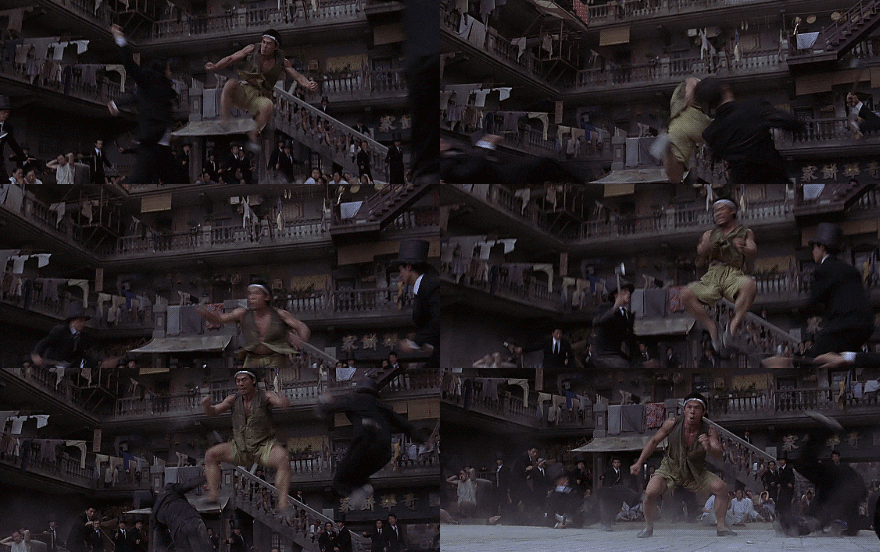
The Stone Road is the tale of two young men in a fantasy not-China. Haung is a would-be soldier offered the chance to serve his Duke as one of his secret elite. Zhou is a diplomat who gets his big break in a mission to secure peace with his province's bitterest enemy - Huang's province. From there things become a bit of a flustercluck and the next thing you know is that there's mad wuxia action all over the place. Hooray! That's what I tuned in for at least.

There is a 50% chance I'm doing this review simply as an excuse to look at Martial Arts gifs

As I have already alluded to, there is nothing groundbreaking about the start of the book. It is a simple idea executed with a solid level of competence. I very nearly did this review after my post on the basics of good writing simply because The Stone Road's beginning struck me as an excellent example of an author doing the basics very well and creating a highly readable story without doing anything amazing. 

This sounds like I'm damning it with faint praise and to an extent I am doing just that. It is definitely good and it is definitely not great. If there is anything great here, it is that Matthews' authorial voice succeeds in making it very charming. There is something touching about the sincerity and naivety with which the main characters take on the tasks that are so clearly poisoned chalices. Everything is crisply narrated, leaving nothing uncompleted or question worthy in the mind. 

Of course, I didn't do this review after the post on the basics. The reason for this is that as things progress, to do so would felt more and more like underselling.

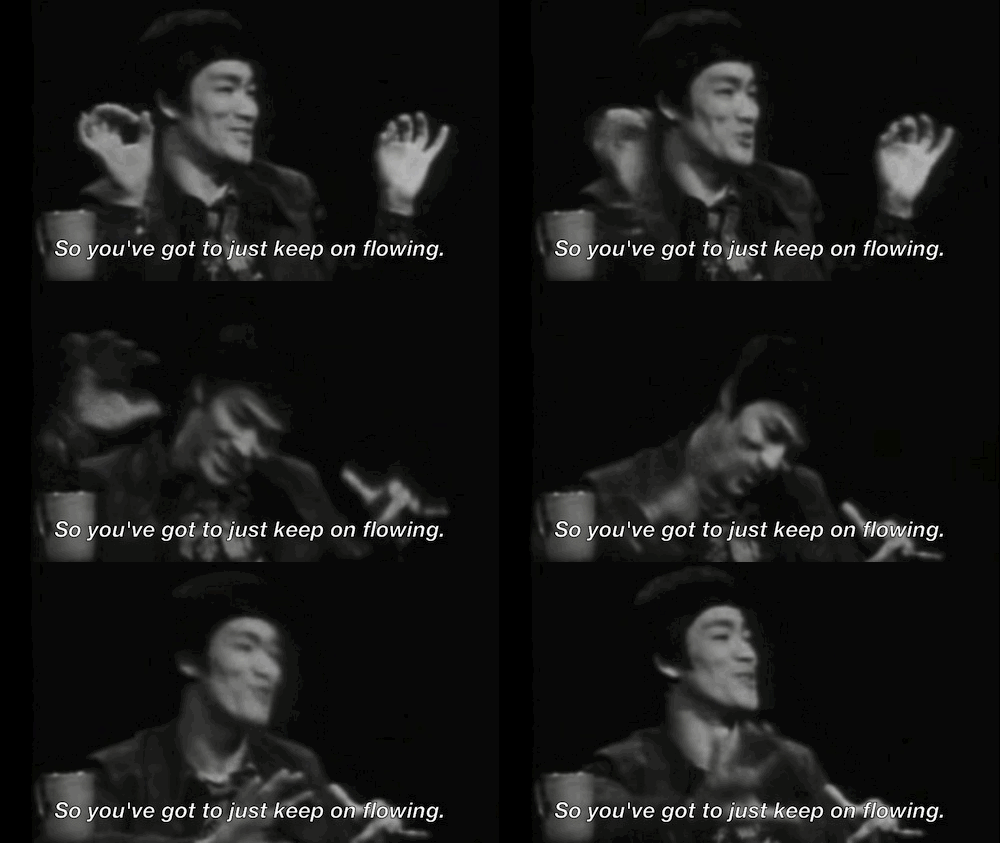
Words of wisdom for any author and/or breaker of people's faces

This is pretty difficult to do without spoiling the ever loving daylights out of the book so I shall have to use generalities. The characters become richer, fuller people and as with real people, they learn from some mistakes and not from others. By the end of the book, Huang, Zhou et al are different people and yet very recognisably the same characters we were introduced to. Matthews posted the following in the Fantasy Faction book club

"More than anything, I wanted the book to be about the growth and change of the two principal characters."

He achieves that. 

He also achieves a broadening complexity of situation, both in terms of the forces opposing the characters and the capabilities of their powers. Some of the former is a little formulaic at times; I do not mind as it is done very solidly. Some of the latter however is quite clever indeed. There is one minor plot thread in particular that had been bugging me throughout the book and is resolved in such a fashion. Normally, resolutions that rely on new knowledge of magic lack satisfaction. However, on the reveal, I realised that the pieces of the puzzle had all been there all along. That's a craftsman's touch that.

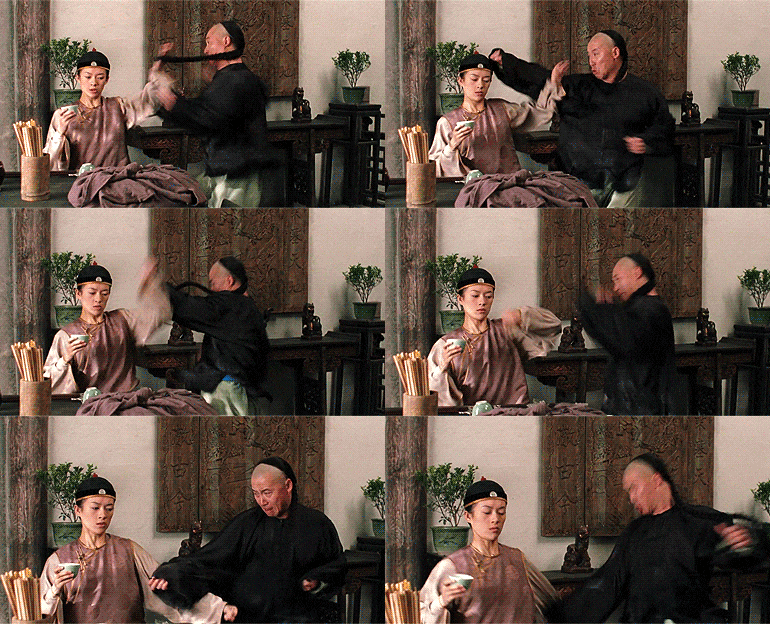
Things that should never happen mid-cuppa
Ultimately it is the little touches that make this book. It doesn't possess wildly innovative ideas or grandstanding scene-stealing characters. As fantasy books go, this is a comforting cup of tea rather than that rare single malt that your hands tremble just to touch. It reads quickly and undemandingly yet, as you go on, you realise someone lavished a lot of care on getting the cup of tea just right. 

And sometimes as a reader, all you really want is a very well made cup of tea.

The Stone Road is such a beast. And at the end of the journey, it hints at being something more. One of these days I'll have to pick up the other books in the series and see where it goes. For now though, I recommend that anyone looking for a straightforwards enjoyable character-based read with some intelligent twists start their journey here.

The Stone Road was self-published by GR Matthews and is available now at Amazon. For further information about GR Matthews and his books, visit his website.

Tuesday, 11 October 2016

Abendau's Legacy by Jo Zebedee

On the 4th of October, 11:39am, I received my ARC of Abendau's Legacy from Jo Zebedee. At 6pm the next day, I email her back to tell her I've finished it.

In that time I also slept for about 12 hours, prepared for, interviewed for and started an internship, walked a half hour around London to find KFC, and performed various other parts of life's miscellany. This was not an empty 30 hours. I finished the book stood on the London Overground, swaying slightly with my big old laptop resting in one hand.

I really liked this book. 

Of course, I was primed to. Abendau's Legacy is the last in a trilogy and having gotten along just dandy with books one and two, I opened up the file for book three with confidence. But getting someone to like your trilogy ender is easy. Getting them to love it is hard. Readers get their set ideas of how the characters should work and the author has to both work with them yet confound them. Expectations are sky high. One fluffed plot resolution can drag the whole thing down.


Every author has that moment where they think this is happening with their book
An example of this is that, despite being clearly utterly captivated, I'm still not quite sure whether I really like Abendau's Legacy or whether I loved it. This is a question that sets a ferociously high standard though as I've loved very few books this year. Suffice to say all fans of the trilogy should walk away satisfied; any new readers should go and pick up Abendau's Heir, knowing that the series is finished and finished well.

At its heart, Abendau's Legacy is about the main cast confronting all their failures of the previous two books and setting them right. It is not the hero's lap of honour; it is not their last desperate roll of the dice either. Kare, Sonly and Lichio all have their chances to walk away and deliberately decide not to do so. In doing so, they set the theme of the story. Every scene, every page can be read as a facet of the need to confront the mistakes of the past before people can move on. I don't know whether this is a deliberate choice by Zebedee or not. Regardless, it works. It gives the book real emotional heft and closure.

This is reinforced by the roles given to Kerra and Baelan, the two children introduced in Sunset over Abendau. They are placed front and centre with their older relatives and while the older characters correct their mistakes, the kids both struggle with the impact of that and make their own. It adds a nice contrast and another view of the human cost of these great epics so beloved of SFF. Its also quite unusual in that I'm really struggling to think of other books in the genre with main characters of such a range of ages, save A Song of Ice and Fire. Zebedee's desire to explore the human cost and willingness to make unconventional decisions in doing so remains one of her big strengths and selling points.


Fortunately, none of the characters have pets
Speaking of characters who take a step forwards, Lichio seems to go from major supporting actor to co-star. His motivations and actions receive more depth and he gets a bigger share of the emotional scenes. The result is a better book. I've made the criticism before that unrelieved grimdark is a bad thing (see the link up the page). Well, Lichio is the relief. He has a levity of spirit, even when undergoing pain, that keeps things from getting too intense. The comparison that springs to mind is the Wheel of Time; he is Mat to Kare's Rand. Not a joker, but the straight man when life is getting too dramatically overwrought. Jordan had plans for outrigger novels involving Mat and I think Lichio is just as good a target for a spin-off (hint hint).

So why am I unsure about whether I loved it?

Abendau's Legacy reads fast. Very fast. Hell, I've pointed out just how fast I've read it. And maybe, just maybe its too fast.

A lot of things happen in Abendau's Legacy and they happen in a relatively short amount of pages. Looking at the kindle files, this is comfortably the shortest of the trilogy. Usually things are the opposite and there's a reason for that. There are plenty of relationships that I wish could have been dealt with in more detail, such as that between Kerra and Baelan, and Lichio and Josef. And all of the other relationships in the book. Literally all of them (well, barring those involving the Empress). There's a few moments where I don't just wish I could have spent more time with the characters, but felt the plot needed to. There were important moments where it was a little jarring just how quickly they flew by. I've always viewed Zebedee's writing as being fast paced. Here, it is breakneck. She did actually tell me she worried about things going too slowly. That's a bit like Slayer being concerned that Raining Blood wasn't quick enough.


Artist's impression of Abendau Legacy's plot
Here's the rub though - would I have finished this book so fast if the story wasn't so taut? Every chapter raises new important questions about what happens next. There's something very moreish about that when done well, as it is here. 

I can guarantee that there will be someone - multiple someones, lots of them - who absolutely definitely fall in love with this book because of how fast it is. A few will have my reservations, only more so. This is a matter of taste after all.

And how will I feel about Abendau's Legacy six months down the line? Five years? After all, I'm not quite done making up my mind now and books, like all other forms of media, can grow on us or become old and pale. In the here and now though, I'm undecided whether I love it. Which means maybe I do. Which is, just so we're clear, a pretty big recommendation from me.

How big is pretty big? To approach this in a round the bushes way, I've noticed I often compare Zebedee to some pretty badass authors. There's two reasons for this:

  1. No one is going to read a writing blog where *everything* is explained by reference to Extreme Metal, collision sports, gastronomy and cat pictures. Some form of comparison to other writers is necessary. Breaks my heart but that's the truth. I'm trying though.
  2. They just flow outta the fingers.

They just do. She writes memorable characters and epic situations that stand with the big boys and girls, so its natural to compare her to them. Abendau's Legacy is her best example of this yet by some distance, and I say this without saying anything rude about Zebedee's other books. So pretty damn big.

Now there's a slight caveat to that. Character and situation are generally the most important things to me in a book. I'm in my glory here. People who demand deep immersive world building might not do so well with these books. Likewise readers who demand very complex stories. The book is good enough that I think such may well like it, but these are not the story's strengths.

Anyone who's looking for characters first though, could make a best new friend here. I can't recommend it strongly enough to those readers. I imagine most reading this will have the trilogy so far but those who have not, go and start at the beginning of the trilogy. It starts very well and it ends excellently. Hmm. Maybe I do love this book after all. Go and give yourself a chance to do so too.

Abendau's Legacy will be published on October 24th by Tickety Boo Press. It can be pre-ordered on Amazon.co.uk or Amazon.com. More information on Jo Zebedee's books can be found on her website. I would like to thank Jo and Tickety Boo Press for my Advanced Review Copy. This does not affect my opinion of the book or the content of my review.

Saturday, 8 October 2016

How much can they take?

One of the reasons for the slight slip up in posting here has been the resumption of the rugby season. I'm not quite as addicted as when it would account for three gym sessions, three games watched, one game played and one training session very badly delivered a week, but it does fill up time.

My first game was a couple of weeks back now - late in the year due to a lot of cry offs on friendlies - and I went off injured. Nothing serious; just a thigh strain. I'd tried running around on it a bit but found that running wasn't really a good description for what happened. It implies speed. I had the speed of a 12 hour filibuster speech.

I wasn't the most spectacular injury that day mind. A friend of mine had his shoulder pop right out - lovely! It popped back in and then, after a break in play and some 'medical' treatment, he tried to keep on playing.

Let us be clear here. This is a completely amateur team, playing 2s fairly deep down the Kent merit tables. Literally nothing was on the line here other than a bit of pride and an enjoyable Saturday afternoon. And he, a mid-thirties guy with a desk job, decided that the obvious thing to do with a dislocated shoulder was keep playing rugby. There's lots of tales about professional sportsmen doing absurd things while heavily injured, but those are people in at the peak of athletic potential with huge amounts of motivation. Not slightly flabby blokes having a laugh with their mates. Of course, being the latter helps account for why he came off, but its still a bit ridiculous.

Ridiculous and its synonyms are words I often hear trotted out on forums when readers are discussing character actions. In SFF, we often write about big damn heroes, who go around doing big damn heroic things. They're right on the edge of human potential and sometimes a little beyond. Sometimes they're a lot beyond. People get surprisingly argumentative about what is physically possible and what is not. They get even more argumentative about what's in line with the previously established physical limits of a character.

And it gets yet worse when talking about the mental limits of a character. Part of what adds to reader discontentment here is that very often, people seek to conflate other people's mental limits with their own. 'I would have seen that trap, so why didn't she?' 'I wouldn't complain about that, so why is he whining?' 'She's smart, and I'm smart, ergo she definitely should have that trap!'

The obvious way of avoiding this sort of negative reaction is consistency. You'll never win over all the readers, but if your characters always react in the same way, then there's no inconsistency to complain of. There's many problems with this though. If a character always acts the same, how is he meant to grow? How do we prevent them from being boring? Perhaps most crucially, how do we prevent them from being unrealistic? Humans are by nature inconsistent. The same person who might struggle to to write one simple email without bursting into tears might the next day be a hero. An utterly fearless warrior can turn into a panicking wreck if forced to swim. Readers know this and accept this, until all of a sudden it doesn't fit their own personal parameters.

Ultimately, this is a blog post without an answer. Consistency is obviously still key, but we have to build consistency for lots and lots of little subroutines and that's pretty hard, particularly if you were planning to tell a story at some point. Part of its simply finding the readers who think like you and accept your logic for how characters work and what they can do. Everybody's heard the doctors talk about the likely effects of James Bond's described drinking habits. James Bond fans don't care. 

Nevertheless, its worth considering. Authors that don't fulfil reader expectations rarely achieve their goals. And human capability for well, anything, has a way of confounding reader expectations. One of my favourite stories related by an author is how Hollywood passed up on a script about a Colombian drug cartel trying to buy a Russian submarine because it was too unrealistic. I mean, this is Hollywood here. And, as some of you may know, this actually happened. No matter how many dragons and wizards we write about, passing off what occurs in reality as realistic will always be one of our biggest troubles.

p.s. A coda. The events described at the start took place in Game One. Game Two, I slam the back of my head very hard onto the ground. Not a concussion, but it still took me a long time to get up (more rain please Thor). Probably even longer to want to get up. I see out the rest of the game, somewhat against my better judgement. 

Game Three is today (in fact, I should be there as we speak) and I clearly did something right as I'm starting. Honesty compels me to admit I really don't want to be as I'm quite unfit at present (not that I'd ever be that honest if any of my rugby team read this). I have no idea how I'll cope. Maybe I'll go off blowing early. Maybe I'll somehow do eighty - after all, fitness isn't just the ability to do something without pain, its the ability to do something while accepting the pain.

Humans are very inconsistent. Perhaps that's why we're so much fun to write about.

Wednesday, 14 September 2016

Protagonists and Observers

If I was an energetic sort, I would make a tongue in cheek "Writer Advice bingo card". Everyone who haunts a forum with an active writing community will probably be able to think of five good truisms for this within a second. One of the candidates for this card would be "Everyone is a protagonist in their own story", a piece of advice that has been on my mind since reading Jo Zebedee's wonderful blog post about the subject.

For those not familiar with the term, it boils down to the fact that all the secondary characters in a story aren't just bits of scenery for the main character, but characters with their own motivation, goals and outlook. Its a regularly repeated piece of advice because its very easy for authors to treat them as the former and a lot better to treat them as the latter. Its also often remarked upon that secondary characters often have more fun and charm that the main character; outstanding secondary characters are often the hook that really drags readers in.

Then Juliana Spink-Mills posted a riff on the subject, linking the concept to personal experience and my brain went into overdrive. I started thinking about how often we get to be the protagonists in our own lives, how people perceive the idea of themselves being a protagonist. I think most people have episodes in their life where they are not the protagonist* - but if we are not the protagonist, what are we? Me, myself, I would say when that happens, I often find myself an observer of someone else's story. But it is still my story. I am simultaneously protagonist and observer.

So what happens when your story's protagonist becomes an observer? What happens when they venture into someone else's story?

Temporarily, the story becomes about the protagonist's reactions, not their actions. This is something of a high-risk high-reward move. The risk is that the protagonist is seen as boring and passive because they're being inactive. People don't want to read about how the protagonist watched all these amazing people solve the problem of the world's imminent end. Its why all those farmboys level up very quickly.


Your protagonist don't get to say that shit if they're always an observer
However, to paraphrase Jim Butcher, reactions are how you get readers to give a flying frack about your characters. Watching them love, hate, get confused, wonder why their significant other hates cheese - that's where readers form bonds. Reactions are what makes characters. That and the choices they make, and we need their reactions for their choices to make sense. 

Having a protagonist react to other people's issues rather than their own allows them to demonstrate their character more fully. You can't see empathy if they're thinking mainly about themselves. You can't hug yourself either, or stand there looking awkward with a hand half-raised as a bad substitute. A protagonist that's not always reacting about their own issues is a lot harder to label as a whiner too.

How people observe tends to reveal a lot about them too. Do they notice the way people fiddle or the slight variation in intonation? Do they have a febrile imagination, filling out people's lives for them with the slightest glance? Do they need beating with the clue stick before they spot things? Another way of putting this would be saying that when the protagonist stumbles into someone else's story, they become the narrator. A short glance at any forum would tell you how much readers think they can work out authors based on how the story is told. When a protagonist tells a story, the author can make it far more explicit how the protagonist is affecting the story they're telling.

The protagonist is always the protagonist. But sometimes we get more of them when they're in someone else's story other than their own.