Being a man with very little focus, I recently let myself get distracted from the terrifying mountain of editing by an idea that occurred to me at work. I wrote a mini-treatment of it at work, talked to some friends (like I mentioned in the last article) and they encouraged me to write some of it. A couple of scenes formed in my head, so I did.
And hated them. They felt flat and short of colour. So I sat down and started considering why, and figured part of it was I'd started in a place and way that didn't showcase the characters' motivations. The agency was absent.
This isn't an article on how agency was important. I considered writing that article but if you're reading this, if you're interested in writing, you know that and you know why.
If I pursue the idea, I'm going to go and make the sense of agency in those characters more standout. But what if I didn't want to? What if I wanted to write an interesting story about people unsure of their place in the world and with no strong motivations? Storytelling's got a problem that can't do that. Hell, Fantasy's got a problem. Just look at all the characters over the years that have had weak agency. One of Fantasy's big archetypes is the great unknown finding someone unsure in their place in the world and changing them.
Now, yeah, the rules says that characters have to have agency. And they say that for a damn good reason. But to paraphrase Terry Rossio, great art is often great because it ignore the rules.
So it got me thinking. How do you ignore the rules of agency? How do you write great stories about passive reactive characters?
This is what I came up with:
1) Foreshadow Growth
I can think of very very few stories where the character lacks motivation the entire story long. If the character has an obvious growth path and arc, that can provide the sense of being interesting that can go missing with a lack of agency. We take that for granted in Coming of Age stories, particularly ones with big prophecies, but that's far from the only way to skin that particular cat.
2) Between a Rock and a Hard Place
One of the reasons agency is so important is its such a great short cut to dramatic tension. Stick the character in a situation where they have to risk what they desire most and you get to see the wee bugger squirm and plot like mad. If the character doesn't have that sort of motivation, then plot events need to provide that sense of dramatic tension. Once you start forcing a character to choose, they develop agency whether they like it or not.
3) Write Incredibly Well
Its kinda obvious but needs to be said. Great books are rarely those that do everything well, they books that do something fantastically well. Take American Gods. I know people who hate Shadow, hate Gaiman's protagonists in general, but only oxygen has a universal fanbase and American Gods is objectively one of the classics of modern fantasy. Why? Because Gaiman has some of the best story ideas the genre has ever seen, great prose, and writes a killer scene. For a lot of people (including myself) that is more than enough to make a great read.
I'm sure there's other ways of beating traditional story structure here. And, much as I love traditional story structure and believe its valuable, authors should be trying to beat it. Because as one great storyteller said:
"Only a special hero can defy stories themselves - and wouldn't that make a cool story anyway?"
Thursday, 25 October 2018

Monday, 15 October 2018
Beating the Block
I've been going through some pretty total writers' block recently. I shan't get much into the details but between the demands of real life, frustration with editing and mental health issues, its been total.
So how am I going to get out of the funk? I read a friend's blog the other day on getting back it - Small Steps, Tiny Bites by Juliana Spink-Mills - and realised that I did need to think about taking definite steps to rebuilding my writing habit.
Juliana's article contains a lot of things that I think are very helpful. In particular I think she's right to talk about comfort books. For me, the block includes a loss of passion, a loss of connection to why my stories are important and should be told. Reading the books I love most, the books that helped convince me some things are important, that is one way to help rekindle the passion.
But there's other things that can help.
For me, music can be huge as both a source of storytelling inspiration and mood regulation. Listening to songs that'll get me in the right frame of mind, rather than any old thing, will help. This thread on SFFChronicles is full of some of my favourites for getting in a storytelling mood but sometimes its less about getting something that brings the ideas and more about something that brings energy. My Shot from Hamilton is my current high energy song of choice but its good to mix it up; for a while it was Psychonaut by Fields of the Nephilim.
Another big one is exercise. Beyond it being just good for you and your mood, there's also the extent to which I think stories on the move. Everyone does stories differently; I don't come up with my stories staring at a computer screen. That's just where I sit when I try to force them out. I come up with them while outside and walking. Its easy to lose physical activity when days are long and boring and you get itchy just to get from A to B to Couch.
Writing is part of a person's life; it becomes intertwined with everything. If a person is struggling with writing and the standard list of writing exercises and small goals isn't cutting it alone, then it is worth examining how deep the roots go. The most trivial seeming things can help if they create the right conditions for writing. No writer succeeds without getting the words out but there are countless different paths to take to get you to that space.
And in writing this paragraph, I've realised somewhere else I've been going wrong. I haven't been talking enough about writing in a way that creates an enthusiasm for it. It's been a fallow time for forum discussion; private correspondence with friends has gone dry for want of progress. But the feedback goes two ways on that. Sometimes a conversation with others can be the spark you need that particular day; sometimes a word of praise the small win you're looking for.
So that's my to do list. Walk more, talk more, listen to the songs that amp me up, and then easing myself back into the saddle with comfortable books and small pieces of writing. Like this blog.
So how am I going to get out of the funk? I read a friend's blog the other day on getting back it - Small Steps, Tiny Bites by Juliana Spink-Mills - and realised that I did need to think about taking definite steps to rebuilding my writing habit.
Juliana's article contains a lot of things that I think are very helpful. In particular I think she's right to talk about comfort books. For me, the block includes a loss of passion, a loss of connection to why my stories are important and should be told. Reading the books I love most, the books that helped convince me some things are important, that is one way to help rekindle the passion.
But there's other things that can help.
For me, music can be huge as both a source of storytelling inspiration and mood regulation. Listening to songs that'll get me in the right frame of mind, rather than any old thing, will help. This thread on SFFChronicles is full of some of my favourites for getting in a storytelling mood but sometimes its less about getting something that brings the ideas and more about something that brings energy. My Shot from Hamilton is my current high energy song of choice but its good to mix it up; for a while it was Psychonaut by Fields of the Nephilim.
Another big one is exercise. Beyond it being just good for you and your mood, there's also the extent to which I think stories on the move. Everyone does stories differently; I don't come up with my stories staring at a computer screen. That's just where I sit when I try to force them out. I come up with them while outside and walking. Its easy to lose physical activity when days are long and boring and you get itchy just to get from A to B to Couch.
Writing is part of a person's life; it becomes intertwined with everything. If a person is struggling with writing and the standard list of writing exercises and small goals isn't cutting it alone, then it is worth examining how deep the roots go. The most trivial seeming things can help if they create the right conditions for writing. No writer succeeds without getting the words out but there are countless different paths to take to get you to that space.
And in writing this paragraph, I've realised somewhere else I've been going wrong. I haven't been talking enough about writing in a way that creates an enthusiasm for it. It's been a fallow time for forum discussion; private correspondence with friends has gone dry for want of progress. But the feedback goes two ways on that. Sometimes a conversation with others can be the spark you need that particular day; sometimes a word of praise the small win you're looking for.
So that's my to do list. Walk more, talk more, listen to the songs that amp me up, and then easing myself back into the saddle with comfortable books and small pieces of writing. Like this blog.
Monday, 8 October 2018
Five Mini-Reviews
Its been a hectic few weeks here, which I've made more hectic by reading multiple books at once. So rather than decide which one to waffle on about, I decided to write small reviews of them all...

The House of Shattered Wings by Aliette de Bodard - De Bodard’s style here reminds me of Guy Gavriel Kay, for better and for worse. She has Kay’s taste for the semi-historical setting, for the usage of humble (and not so humble) characters amid grand events, for elegant and poetic prose and slow-developing epic narratives. It is captivating, but patience testing enough to counter that captivation. De Bodard’s characters seem to lack the grand exuberant passion of Kay’s character, which make them that unfortunate tad less interesting. Nevertheless, I am excited to see how this progresses, particularly Phillipe’s story. If the Kay comparison holds true, this will have one hell of an ending.

Blood of Assassins by RJ Barker - There’s a neat, nifty and unfortunate trait here. Barker has shifted the tone of the book considerably to show Girton’s maturation into a bitter young man. I marvel at the skill but mourn at the loss of the warm wry narrative voice. That’s part of the reason I like this sequel less than its predecessor. The other part would be a large and underdeveloped cast that doesn’t have the great appeal of those in Age of Assassins, and the underuse of the wonderful Merela Karn. In short, most of the book’s problems stem from comparison to Age of Assassins. This means you should read Age of Assassins, because its such an impossible to reach benchmark. You should also read Blood of Assassins if you do, because it’s still an exciting fantasy romp with a little bit of everything.
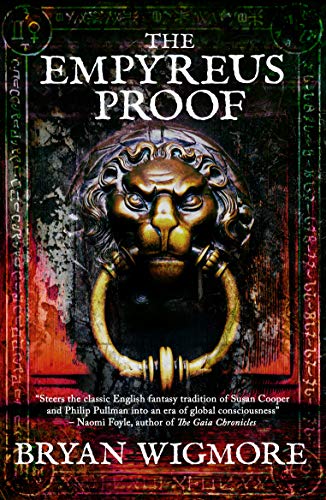
The Empyreus Proof by Bryan Wigmore - I read this as a beta and I’m currently re-reading it to do a proper review. There’s an interesting contrast in how to do a sequel between this and the above title. Blood of Assassins resolutely follows Girton’s journey; The Empyreus Proof spreads its net wide as the main characters from the last book spread out, pursue other paths and meet others. In general, I prefer the latter I think, or at least when done right. Wigmore’s Not-Quite Edwardian era world is interesting, as is his magic, but the real star turn here comes from the characters’ narrative arcs. The exploration of character, of identity and humanity is something Wigmore does as well as anyone - and the fantasy is here to serve that, not obscure that.

The Eagle's Flight by Daniel E. Olesen - I do not mean to presume at knowing an author’s mind, but my guess is Olsen wrote this after looking at SoIaF and LotR and thinking: “We need something with SoIaF’s political machinations and semi-hard historical setting married to LotR’s archaic tone and wide spread view.” The result is something fascinating and almost daunting. In tune with the current demand for blood and guts adventures it is not but personally that makes Flight of Eagles a welcome change of pace. It feels genuinely epic and while I sometimes chafed at the slow pace, I always wanted to know what happened next. I urge anyone who thinks those themes sound interesting to get involved.

Hell of a Deal: Demon Trader by Mark Huntley-James - Written by my most recent interview victim (assuming he forgives me recently flaking out for a couple of weeks), Hell of a Deal is a very different beast to the rest of those on display here. A comedic urban fantasy about a man broking deals with hell, it reminds me somewhat of Robert Rankin or Good Omens in the way it deals with British life side by side with the occult. It’s a combination that is very close to my heart and enlivened by a sense of the absurd that’s very similar to Rankin too. Well worth a look.
The House of Shattered Wings by Aliette de Bodard - De Bodard’s style here reminds me of Guy Gavriel Kay, for better and for worse. She has Kay’s taste for the semi-historical setting, for the usage of humble (and not so humble) characters amid grand events, for elegant and poetic prose and slow-developing epic narratives. It is captivating, but patience testing enough to counter that captivation. De Bodard’s characters seem to lack the grand exuberant passion of Kay’s character, which make them that unfortunate tad less interesting. Nevertheless, I am excited to see how this progresses, particularly Phillipe’s story. If the Kay comparison holds true, this will have one hell of an ending.
Blood of Assassins by RJ Barker - There’s a neat, nifty and unfortunate trait here. Barker has shifted the tone of the book considerably to show Girton’s maturation into a bitter young man. I marvel at the skill but mourn at the loss of the warm wry narrative voice. That’s part of the reason I like this sequel less than its predecessor. The other part would be a large and underdeveloped cast that doesn’t have the great appeal of those in Age of Assassins, and the underuse of the wonderful Merela Karn. In short, most of the book’s problems stem from comparison to Age of Assassins. This means you should read Age of Assassins, because its such an impossible to reach benchmark. You should also read Blood of Assassins if you do, because it’s still an exciting fantasy romp with a little bit of everything.
The Empyreus Proof by Bryan Wigmore - I read this as a beta and I’m currently re-reading it to do a proper review. There’s an interesting contrast in how to do a sequel between this and the above title. Blood of Assassins resolutely follows Girton’s journey; The Empyreus Proof spreads its net wide as the main characters from the last book spread out, pursue other paths and meet others. In general, I prefer the latter I think, or at least when done right. Wigmore’s Not-Quite Edwardian era world is interesting, as is his magic, but the real star turn here comes from the characters’ narrative arcs. The exploration of character, of identity and humanity is something Wigmore does as well as anyone - and the fantasy is here to serve that, not obscure that.
The Eagle's Flight by Daniel E. Olesen - I do not mean to presume at knowing an author’s mind, but my guess is Olsen wrote this after looking at SoIaF and LotR and thinking: “We need something with SoIaF’s political machinations and semi-hard historical setting married to LotR’s archaic tone and wide spread view.” The result is something fascinating and almost daunting. In tune with the current demand for blood and guts adventures it is not but personally that makes Flight of Eagles a welcome change of pace. It feels genuinely epic and while I sometimes chafed at the slow pace, I always wanted to know what happened next. I urge anyone who thinks those themes sound interesting to get involved.
Hell of a Deal: Demon Trader by Mark Huntley-James - Written by my most recent interview victim (assuming he forgives me recently flaking out for a couple of weeks), Hell of a Deal is a very different beast to the rest of those on display here. A comedic urban fantasy about a man broking deals with hell, it reminds me somewhat of Robert Rankin or Good Omens in the way it deals with British life side by side with the occult. It’s a combination that is very close to my heart and enlivened by a sense of the absurd that’s very similar to Rankin too. Well worth a look.
Thursday, 13 September 2018
"Our Own Deep Natures": An Interview with Bryan Wigmore
Its a great pleasure getting to interview your favourite authors, so the release of Bryan Wigmore's The Empyreus Proof was the idea excuse to drag him in for another chat. This is what I got out of him....
PL: Congratulations on TEP [The Empyreus Proof]! Now, that's an interesting title, not least because I'm a child and find the initial reusage funny. Why did you pick that title, and what does it hint at about the book?
BW: Wow, that's setting the bar pretty high for difficulty! This is going back a while, but I think the title just popped into my head, and I liked it. What rationale (if any) was going on in my subconscious before that happened, I can't say without benefit of an expensive course of hypnosis. I latched onto the fact that it shared two initials with TGP [The Goddess Project] (and the "r" after the P as well) which I found pleasing, and I liked that it hinted at the possible uncovering of an important mystery set up in TGP. The Empyreum is a major player in the events of that book, and reference is made to the question of its ruler's divinity, with one of the monks of Highcloud calling him "that gibbering head", and so on. I think those are things I would have picked up as a reader of TGP, and what I would be interested in having answered in its sequel. The nature of the "divine" is a major thread throughout the series.
PL: Well you're an old hand at this now, I figure I can fire the difficult ones first now. But lets go easy. What particular aspects of the nature of the divine would you say you're most intrigued by?
BW: Ah, that's easier. I'd say the meeting-place between the genuine spiritual/supernatural and human influence/interference, and what it tells us both about our own deep natures, and our ability to warp reality with our own egos and insecurities. Or something.
PL: Well, that definitely makes sense having read the book. Do you ever feel nervous, handling big themes like these? Worry that people will start ranting about how offensive it is, or that you won't do the subject justice?
BW: Actually, the thought that anyone might rant about its being offensive never occurred to me until you mentioned it! I guess I just assumed that the kind of people who might be offended were unlikely to read it. As for not doing the theme justice, I suppose I do worry that I might miss a particularly fruitful avenue of exploration that would have benefitted the story, but that's from me wanting to write the best fantasy, not to impart my "wisdom" (which in any case is so vague, it would make the worst lesson ever).
PL: Speaking of writing the best fantasy - did writing TEP differ from writing TGP at all?
BW: Yes, it was more difficult! With TGP, I quickly got some idea of the overall shape of the story. With TEP, I knew where they started and where they would end up, but apart from the nature of one new character, pretty much everything was a blur -- and sometimes stayed a blur until I was right on top of it. Several times I had to wait for inspiration as to how characters would credibly get out of the horrendously tricky situations I'd put them in. In at least one instance, I realised there was no credible way out, and that the character would just have to suffer the consequences of their earlier actions, and the rest of the story then had to be re-planned (to the extent that it was planned at all) to take account of it.
Another difference was knowing how much to resolve some of the mysteries. In TGP, the choice between what would be resolved and what left open felt quite obvious, but in TEP it was much less so, and one major revelation caused some fretting over whether it best fitted this book or the next. (It ended up in TEP, a decision I'm now very happy with.)
Another difference was knowing how much to resolve some of the mysteries. In TGP, the choice between what would be resolved and what left open felt quite obvious, but in TEP it was much less so, and one major revelation caused some fretting over whether it best fitted this book or the next. (It ended up in TEP, a decision I'm now very happy with.)
PL: Do you think the extra difficulty was partially due to the added weight of being second in a series, with all the accumulated plot threads? Or just one of those things?
BW: It was like starting a novel where every character has a really complex backstory that you can't change. Well, I could have changed it -- this was before TGP was published, so I could have gone back and altered what had happened in that -- but I didn't want to. I liked the accumulated plot threads, but they did cause some difficulties I didn't foresee at the outset. It seems strange to me now, for example, that most of Orc's story wasn't clear at the beginning, and crept up on me as I went on. And that caused problems because I thought the direction his story took might make him a much less sympathetic character, which I felt would be risky. So there was some pauses while I debated whether to resist the path events seemed to be taking, and then (almost always) decided to go with it.
|
| The cover |
PL: I think there's a really hard line there for an author to follow in terms of having characters perform actions that are natural and human, and always remaining sympathetic - and the success with which you've done so is one of my favourite things about your books to date. Is there any particular knack to that?
Also, which of your characters has your favourite arc in TEP?
Also, which of your characters has your favourite arc in TEP?
BW: Probably it's just to treat them as real people rather than game counters, and not have them do something just because the plot demands it, no matter how strong the apparent need. I think if you can understand the reasons why a character does something, then you can sympathise with them even if you think what they've done is harmful. And if you as an author can sympathise with them, there's a much better chance readers will (though that isn't a given, as I've found).
My favourite arc in this book has to be Orc's, and it's perhaps no coincidence that several major turning-points in his story were completely unplanned, and one unexpected reversal shook up the whole of the rest of the book (and the series, though in the end it fitted very well with my original scheme). Hana's runs it a close second, though I'm sure many people will think I've been a complete bastard to her. But then, if she will go messing with powers above her level ...
My favourite arc in this book has to be Orc's, and it's perhaps no coincidence that several major turning-points in his story were completely unplanned, and one unexpected reversal shook up the whole of the rest of the book (and the series, though in the end it fitted very well with my original scheme). Hana's runs it a close second, though I'm sure many people will think I've been a complete bastard to her. But then, if she will go messing with powers above her level ...
PL: And - at the risk of mild spoilers - what arcs are you looking forwards to going into the next book?
BW: Geist's, for sure. He's perhaps the central character in the third book. We find out what his great decades-long plan is, and see him put it into practice, in all its moral complexity and with all its inevitable fallout. But everyone will have a significant storyline: Cass's is another I'm looking forward to writing.
PL: What about themes? Are there any themes you're particularly looking forwards to developing - or maybe even introducing?
BW: I'm looking forward to getting deeper into the theme that's been there since the beginning, but has perhaps not quite fully emerged so far, which is the tension between what some think of as being the Apollonian vs Dionysian modes, or (broadly) definition vs dissolution. In the books, these are most clearly represented by the the two serpents, Saeraf and Chthonis, and then by Gevurah and the Goddess. (These divisions have been there since the start, but as their own thing rather than as aspects of that overarching dichotomy.) One of the questions the story raises is, are we better off for these two aspects being kept so far apart (and for us aligning ourselves so firmly with the Apollonian, as the Empyreum has), or has it been harmful?
Then there's the theme of identity, which was so strong in TGP. The next two books explore whether a strong sense of self, an aspect of Saeraf, is actually a good thing, and whether an absence is really a weakness.
Then there's the theme of identity, which was so strong in TGP. The next two books explore whether a strong sense of self, an aspect of Saeraf, is actually a good thing, and whether an absence is really a weakness.
PL: Which of your characters do you think has the biggest struggle with identity? And are there any books where you particularly like the way they handle identity?
 |
| There was a sad lack of Otter talk in this interview, so here's an artist's depiction of a spirit guide at work |
BW: The one with the biggest struggle with identity has to be Tashi. His role in life, his home, his faith, his body, the very nature of his physical substance, who his friends are -- the poor lad can't be sure of anything most of the time. And that's appropriate, because he probably has more conception of the identity -- the Self -- than the others, being grounded as he is in a religion that holds it as almost more important that anything else.
Orc and Hana are the other two that have major problems with identity, but certainly in Hana's case, that's less of a struggle as she's not so aware of what's going on in terms of its loss.
Two books by David Mitchell spring to mind -- Number9Dream, in which a Japanese teenager searches for his father and thus his place in the world, and the central section of Ghostwritten, about a wandering spirit who can't remember who he is, and (in a brilliant, very moving passage) finds out.
If I'm allowed non-books, the story whose identity issues I love most has to be the JRPG Final Fantasy VII. It is astonishing and very satisfying, and if not for the tedious random battles, I'd probably play through it every year.
Orc and Hana are the other two that have major problems with identity, but certainly in Hana's case, that's less of a struggle as she's not so aware of what's going on in terms of its loss.
Two books by David Mitchell spring to mind -- Number9Dream, in which a Japanese teenager searches for his father and thus his place in the world, and the central section of Ghostwritten, about a wandering spirit who can't remember who he is, and (in a brilliant, very moving passage) finds out.
If I'm allowed non-books, the story whose identity issues I love most has to be the JRPG Final Fantasy VII. It is astonishing and very satisfying, and if not for the tedious random battles, I'd probably play through it every year.
PL: Of course games count. Do you think there's anything you learned about storytelling from games?
BW: Ideal mini-climax = cut-scene plus boss fight.
I haven't interpretted that literally in mine -- there isn't a lot of combat -- but games do seem often to know how to build up and release tension, with the dramatic developments (the cut scene) building it up and then action (the boss fight) releasing it.
And there have been examples of storyline developments in games that have left me gob-smacked and wanting to emulate their effects, which have influenced my writing even if they haven't led to me absorbing particular "rules" or techniques. One in FFVII involved a photograph revealing a previously unsuspected truth -- which might even have influenced the inclusion of a photograph in TEP -- and there was a reversal in the PS2 game Summoner which was brilliantly audacious, in which it turned out that the heroic quest you'd been undertaking was in fact aiding the forces of evil. (I won't say whether that influenced any aspect of my series!)
I haven't interpretted that literally in mine -- there isn't a lot of combat -- but games do seem often to know how to build up and release tension, with the dramatic developments (the cut scene) building it up and then action (the boss fight) releasing it.
And there have been examples of storyline developments in games that have left me gob-smacked and wanting to emulate their effects, which have influenced my writing even if they haven't led to me absorbing particular "rules" or techniques. One in FFVII involved a photograph revealing a previously unsuspected truth -- which might even have influenced the inclusion of a photograph in TEP -- and there was a reversal in the PS2 game Summoner which was brilliantly audacious, in which it turned out that the heroic quest you'd been undertaking was in fact aiding the forces of evil. (I won't say whether that influenced any aspect of my series!)
PL: What's your favourite mini-climax in each book so far? The moment you think will really get readers most?
BW: My personal favourite in TGP is at the end of the Great Ziggurat chapter, ch26. After all the excitement of the dive, things seem to have calmed down, when the Empyreal warship Archon, forgotten about for the past four chapters, suddenly appears and begins causing chaos. So we have action/tension (the almost fatal dive), then the release, then the very quick ramping up again from a perhaps unexpected source.
In TEP, it has to be the end of chapter 30, "Reunion". I'm very happy with how the tension builds up throughout the few chapters before that, to the point where it can only be satisfactorily discharged by something terrible happening to someone. (For a long time, perhaps months, I wasn't actually sure who that would be, out of the several candidates.)
I've noticed that in both those chapters, the viewpoint switches back and forth. I think in the TEP chapter it's the first chapter where that happens at all, and in the TGP one it probably happens more than in any other.
In TEP, it has to be the end of chapter 30, "Reunion". I'm very happy with how the tension builds up throughout the few chapters before that, to the point where it can only be satisfactorily discharged by something terrible happening to someone. (For a long time, perhaps months, I wasn't actually sure who that would be, out of the several candidates.)
I've noticed that in both those chapters, the viewpoint switches back and forth. I think in the TEP chapter it's the first chapter where that happens at all, and in the TGP one it probably happens more than in any other.
Thanks to Bryan for his time and answers! The Empyreus Proof is out now from Snow Books and you should buy it - check back soon for a review explaining why (not that you need to read it, just trust me here)
Monday, 10 September 2018
Anarchy in Ultima Thule: Barbarians in Fantasy
I forget why this was brought back to my memory, but deep in the bowels of a thread on what we'd like to see less of in fantasy on BFB, Allan Batchelder said he was conflicted by all the big barbaric northmen in fantasy.
He has a point. People spew venom about dragons and elves, roll their eyes at orcs and dark lords, and on and on and on, but big barbaric northmen appear in more series than the above by my reckoning. Joe Abercrombie might have gone to town on every other fantasy trope in the book, but northmen like Logen Ninefingers and Caul Shivers could have walked right out of a Howard or Leiber book. They are a stereotype that endures with little but happy comments in a genre seemingly jaded and restive for change.
The why of that intrigues me. I love Vikings and the Ancient Celts as much as the next shaggy-haired mead-drinking myth-reading pagan-thinking maniac and know a lot of others do. But the desire to see those cultures exported again and again to the page alone is surely not enough. Not alone.
My favourite five minute theory is that in fantasy worlds aping the complex social natures and subsequent injustices of the real world, the BBN gets to be the one that cuts through the crap. They tell and live it like it is, instead of getting ground down by the system. That's as true for Conan exploiting the weaknesses of the soft civilised kingdoms of the Hyborian age as it is for Logen pointing and laughing at Jezal's ridiculous airs and graces. They are picaresque heroes, sane men in an insane world.
Every author needs an outsider or ten to gawp and ask questions. Its part of why David Eddings recommended making heroes very uneducated. That is one way and it's no small part of the Portal Fantasy's appeal. But outsiders work just as well. Moreover, the uneducated hero is not as well placed as the outsider to question the conventional wisdom they hear. As fantasy increasingly mirrors the world's cynicism and anger, we want those questions from the characters we read.
It might account for why, if anything, BBN seem to be getting even more popular. The 80s/90s fiction I grew up reading featured them, but going from memory not as heavily as Abercrombie or Lawrence.
Of course, these are not the only form of BBN out there. Sometimes they get to be the howling hordes coming to destroy civilisation, akin to the Mierces in Anna Stephens' Godblind. Sometimes the prevailing culture are the BBN, which means they can't be the straight talking outsiders, although that does tend to signal some bloody robust politics - I think this is fair comment on RJ Barker's Age of Assassins.
But in general, I think that when we see the BBN, we know we're going to hear the things we wished we'd see and the arsekickings we'd like to hand out. They're our avatars of contempt and outrage for the compromises we surround ourselves with. Its why the comic Conan is my Spirit Guide is such genius. It speaks directly to that yearning.
Now, in this light, I'd like to see less of this type of BBN. Don't get me wrong - I love them. My unfinished manuscripts are littered with them. There's one called Barbarians that's basically an entire book of this. But they shouldn't be allowed to hog that space. Obviously, you can have BBN and another contrarian in the same book (i.e. Logen and Glokta). And it would be fun to see the Ancient Celtic and early medieval Norse cultures given greater scope than noble heroic barbarians and bloodthirsty villain barbarians.
But if you want to use a Big Barbaric Northman? Do it. The people aren't sick of them yet and thank gods for that.
He has a point. People spew venom about dragons and elves, roll their eyes at orcs and dark lords, and on and on and on, but big barbaric northmen appear in more series than the above by my reckoning. Joe Abercrombie might have gone to town on every other fantasy trope in the book, but northmen like Logen Ninefingers and Caul Shivers could have walked right out of a Howard or Leiber book. They are a stereotype that endures with little but happy comments in a genre seemingly jaded and restive for change.
The why of that intrigues me. I love Vikings and the Ancient Celts as much as the next shaggy-haired mead-drinking myth-reading pagan-thinking maniac and know a lot of others do. But the desire to see those cultures exported again and again to the page alone is surely not enough. Not alone.
My favourite five minute theory is that in fantasy worlds aping the complex social natures and subsequent injustices of the real world, the BBN gets to be the one that cuts through the crap. They tell and live it like it is, instead of getting ground down by the system. That's as true for Conan exploiting the weaknesses of the soft civilised kingdoms of the Hyborian age as it is for Logen pointing and laughing at Jezal's ridiculous airs and graces. They are picaresque heroes, sane men in an insane world.
Every author needs an outsider or ten to gawp and ask questions. Its part of why David Eddings recommended making heroes very uneducated. That is one way and it's no small part of the Portal Fantasy's appeal. But outsiders work just as well. Moreover, the uneducated hero is not as well placed as the outsider to question the conventional wisdom they hear. As fantasy increasingly mirrors the world's cynicism and anger, we want those questions from the characters we read.
It might account for why, if anything, BBN seem to be getting even more popular. The 80s/90s fiction I grew up reading featured them, but going from memory not as heavily as Abercrombie or Lawrence.
Of course, these are not the only form of BBN out there. Sometimes they get to be the howling hordes coming to destroy civilisation, akin to the Mierces in Anna Stephens' Godblind. Sometimes the prevailing culture are the BBN, which means they can't be the straight talking outsiders, although that does tend to signal some bloody robust politics - I think this is fair comment on RJ Barker's Age of Assassins.
But in general, I think that when we see the BBN, we know we're going to hear the things we wished we'd see and the arsekickings we'd like to hand out. They're our avatars of contempt and outrage for the compromises we surround ourselves with. Its why the comic Conan is my Spirit Guide is such genius. It speaks directly to that yearning.
Now, in this light, I'd like to see less of this type of BBN. Don't get me wrong - I love them. My unfinished manuscripts are littered with them. There's one called Barbarians that's basically an entire book of this. But they shouldn't be allowed to hog that space. Obviously, you can have BBN and another contrarian in the same book (i.e. Logen and Glokta). And it would be fun to see the Ancient Celtic and early medieval Norse cultures given greater scope than noble heroic barbarians and bloodthirsty villain barbarians.
But if you want to use a Big Barbaric Northman? Do it. The people aren't sick of them yet and thank gods for that.
Sunday, 9 September 2018
Five Quick Thoughts: Thought Quicker
1) I probably shouldn't encourage competition, but I hope everyone even remotely interested goes for Tor's Call for Contributors as Tor's pretty much always had the best blogs out there. The more people going for it, the more that stays the same. Now I just need to type up my own pitch and wait for the polite rejection.
2) Speaking of promoting things, The Ninth Rain by Jen Williams and Legend by David Gemmell are both available for 99p on Amazon. I don't know if Jen's read much Gemmell but it wouldn't surprise me if she had - there's a similar heroic feeling to both. Well worth getting both. I'd love to tell you about good bargains outside of Amazon, but people don't seem to be publicising that nearly as well.
3) I've been following the Pathfinder 2 play test and one of their more controversial rules seems aimed at stopping characters from having so many magical items they resemble Christmas Trees. I'm all in favour of this, as I play RPGs to emulate the books I read, and how many fantasy books can you think of where multiple characters had multiple magic items? Its what makes it such a shame that in many other ways, they're reinforcing the dependence on magic items. That said, I'd love to read more books (not LitRPG) based on the idea of characters deriving much of their power from the items they have. I feel like the only one where I've done so is the XianXia book I Shall Seal The Heavens. Coincidentally, this is also the only book I've read where people's butts explode all the time, and again I'd like to read more books like that.
4) It recently occurred to me that I've not really read much of the new hotness - I've yet to read Kings of the Wyld, Court of Broken Knives or Blackwing. I really should but as I sit here, I'm kinda jaded about the thought of reading about another group of warriors, mystics and politicians beating off great odds. I'd love to see some big mainstream fantasy where the heroes are doctors, teachers, potters - whatever. Something moving Fantasy beyond Action-Adventure. I think its why the grand saga of Jade City has stuck in my memory where a lot of books I maybe enjoyed more at the time haven't.
5) Not really a thought, but I'm touting for business. If there's any authors out there reading this looking for a review or interview, ping me through my twitter of @PeatLong
2) Speaking of promoting things, The Ninth Rain by Jen Williams and Legend by David Gemmell are both available for 99p on Amazon. I don't know if Jen's read much Gemmell but it wouldn't surprise me if she had - there's a similar heroic feeling to both. Well worth getting both. I'd love to tell you about good bargains outside of Amazon, but people don't seem to be publicising that nearly as well.
3) I've been following the Pathfinder 2 play test and one of their more controversial rules seems aimed at stopping characters from having so many magical items they resemble Christmas Trees. I'm all in favour of this, as I play RPGs to emulate the books I read, and how many fantasy books can you think of where multiple characters had multiple magic items? Its what makes it such a shame that in many other ways, they're reinforcing the dependence on magic items. That said, I'd love to read more books (not LitRPG) based on the idea of characters deriving much of their power from the items they have. I feel like the only one where I've done so is the XianXia book I Shall Seal The Heavens. Coincidentally, this is also the only book I've read where people's butts explode all the time, and again I'd like to read more books like that.
4) It recently occurred to me that I've not really read much of the new hotness - I've yet to read Kings of the Wyld, Court of Broken Knives or Blackwing. I really should but as I sit here, I'm kinda jaded about the thought of reading about another group of warriors, mystics and politicians beating off great odds. I'd love to see some big mainstream fantasy where the heroes are doctors, teachers, potters - whatever. Something moving Fantasy beyond Action-Adventure. I think its why the grand saga of Jade City has stuck in my memory where a lot of books I maybe enjoyed more at the time haven't.
5) Not really a thought, but I'm touting for business. If there's any authors out there reading this looking for a review or interview, ping me through my twitter of @PeatLong
Friday, 7 September 2018
Godblind by Anna Stephens
There's a reason I don't go chasing chances to reviews remorselessly. The reason is that I'm a big girl's blouse who dislikes hurting other people's feelings, particularly people I like. And by now, a solid proportion of the books I read are by people I like. I don't - or didn't - want to review heavily as I didn't want to write mainly negative reviews. However, every barrier must be broken.
That's a really inviting intro to a review, isn't it?
Let me state now that Anna Stephens gets a lot right in Godblind. Its not like this was a Do Not Finish or anything. I know someone enjoying it right now after having doubts about the opening pages and I know a lot of other people will. She's got a good felicity of style - not as perfect for me as RJ Barker, but still enjoyable and more-ish. She's also got a good grasp of story. Godblind has a gripping narrative that rattles along as fast as anything I've read, jumping from action scene to action scene (something else does well) with few pauses, most of them for the rather sweet romances.
My favourite thing about Godblind are the interactions between the reluctant prophet Dom and the world's gods. They're filled with character and a suitable sense of the power of the divine. Stephens definitely hit my sweet spot there. In terms of that theme and some other ways, Godblind reminds me a little of the Wheel of Time, only as if rewritten by Joe Abercrombie during a fortnight long bender fuelled by every stimulant he can find.
Unfortunately that pace seems to have obliterated a lot of the fine detail. The book is very barebones when it comes to exposition, leaving me rather in the dark on the world beyond the gods. The same fog of war extends to the characters, many of whom feel a little flat. I didn't get the sense of light and dark in the same people that Stephens targeted with Godblind and was, if anything, surprised at how Whitehat v Blackhat it felt.
The worst part is that, without understanding the world and character logic, I frequently became exasperated by their decisions. Team Whitehat felt foolish, Team Blackhat felt too competent. The above paragraph are things that didn't affect my enjoyment. This part of it did in a major way. Although I think part of it is less me not understanding and more me disagreeing. One character seemed to win non-stop without trying and with only the most cosmetic setbacks, and regardless of internal logic, that's never a fun read for me.
So how is Godblind going to work out for other people? Well, I cheated here a little. Unsure of whether I'd missed something I went and looked at Goodreads reviews after I read it, and a lot of what I said here echoes what others have said. As such, I feel pretty safe in saying that people who like their fantasy to have that in-depth feeling have a good chance of not liking this book. People who are mainly looking for a high octane adventure full of blood and thunder are in the right place though.
Myself? Well, I'm still not utterly sure. For me Godblind was a curate's egg. But what was good, was good indeed.
And yes, that is my idea of a negative review. Savage I know. I am indeed utterly wet and a weed.
That's a really inviting intro to a review, isn't it?
Let me state now that Anna Stephens gets a lot right in Godblind. Its not like this was a Do Not Finish or anything. I know someone enjoying it right now after having doubts about the opening pages and I know a lot of other people will. She's got a good felicity of style - not as perfect for me as RJ Barker, but still enjoyable and more-ish. She's also got a good grasp of story. Godblind has a gripping narrative that rattles along as fast as anything I've read, jumping from action scene to action scene (something else does well) with few pauses, most of them for the rather sweet romances.
My favourite thing about Godblind are the interactions between the reluctant prophet Dom and the world's gods. They're filled with character and a suitable sense of the power of the divine. Stephens definitely hit my sweet spot there. In terms of that theme and some other ways, Godblind reminds me a little of the Wheel of Time, only as if rewritten by Joe Abercrombie during a fortnight long bender fuelled by every stimulant he can find.
Unfortunately that pace seems to have obliterated a lot of the fine detail. The book is very barebones when it comes to exposition, leaving me rather in the dark on the world beyond the gods. The same fog of war extends to the characters, many of whom feel a little flat. I didn't get the sense of light and dark in the same people that Stephens targeted with Godblind and was, if anything, surprised at how Whitehat v Blackhat it felt.
The worst part is that, without understanding the world and character logic, I frequently became exasperated by their decisions. Team Whitehat felt foolish, Team Blackhat felt too competent. The above paragraph are things that didn't affect my enjoyment. This part of it did in a major way. Although I think part of it is less me not understanding and more me disagreeing. One character seemed to win non-stop without trying and with only the most cosmetic setbacks, and regardless of internal logic, that's never a fun read for me.
So how is Godblind going to work out for other people? Well, I cheated here a little. Unsure of whether I'd missed something I went and looked at Goodreads reviews after I read it, and a lot of what I said here echoes what others have said. As such, I feel pretty safe in saying that people who like their fantasy to have that in-depth feeling have a good chance of not liking this book. People who are mainly looking for a high octane adventure full of blood and thunder are in the right place though.
Myself? Well, I'm still not utterly sure. For me Godblind was a curate's egg. But what was good, was good indeed.
And yes, that is my idea of a negative review. Savage I know. I am indeed utterly wet and a weed.
Subscribe to:
Comments (Atom)